
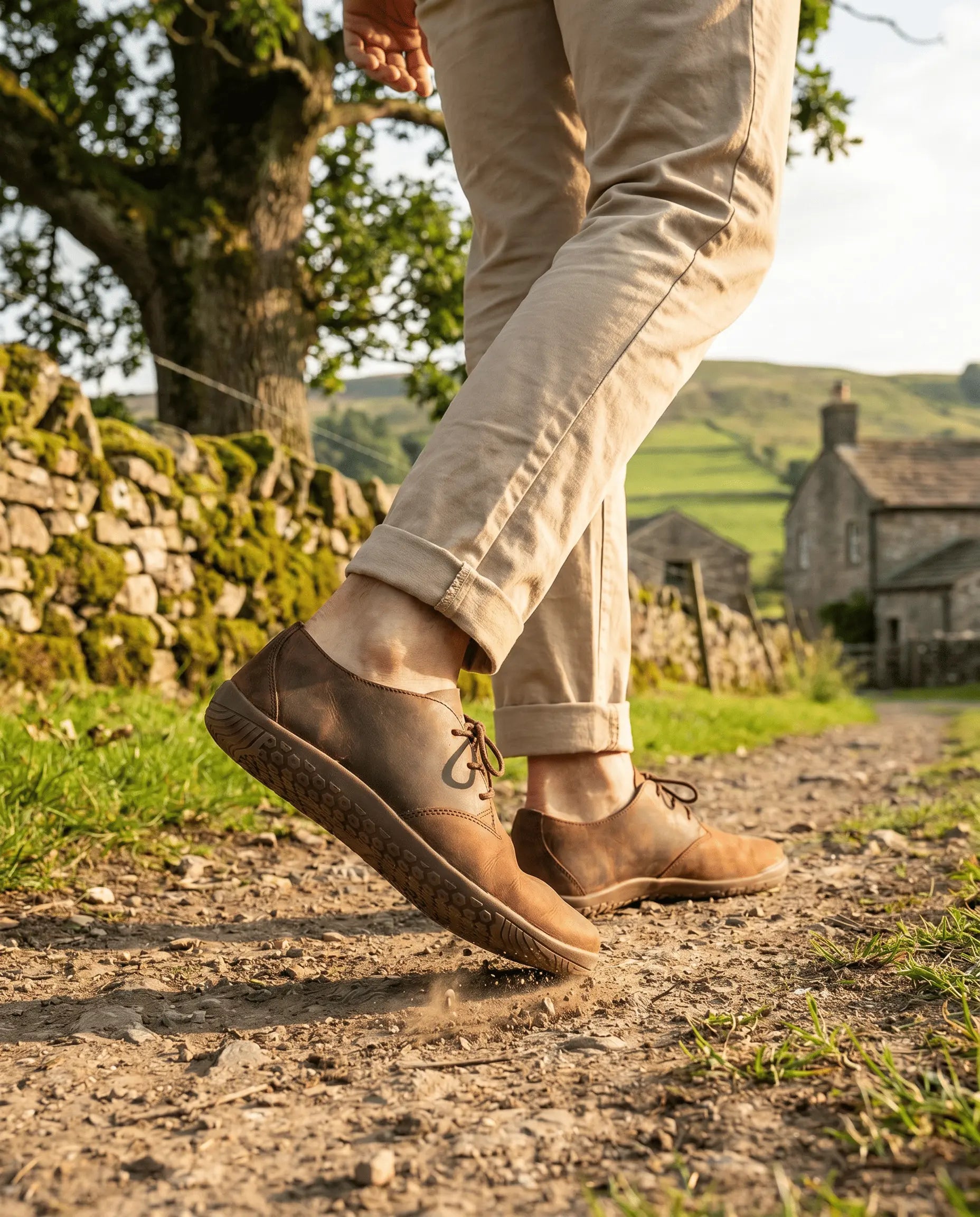
Barefoot shoes market has expanded considerably over the past few years, which means there's now a genuinely good range of options and, if you're not careful, a lot of confusing overlap between styles.
The core things to look for don't change regardless of which pair you're eyeing:
- A wide, foot-shaped toe box with actual room across the forefoot
- Zero drop sole, meaning no height difference between heel and toe
- Flexibility that lets the shoe bend with your foot rather than against it
- Grip that works on real surfaces, not just flat floors in product photography
What changes is the construction, materials, and intended use. A leather everyday shoe and a trail-ready boot are both barefoot shoes. They're not the same thing. Knowing what you actually need before you buy is the bit most people skip.
Barefoot Shoes: Same Principles, Often Different Fit Needs
The principles behind mens & womens barefoot shoes are identical. What does vary is fit. Women's feet tend to have a slightly different shape. Especially across the midfoot and heel. So, a shoe cut generically for all feet won't always sit right. Barely Barefoot designs unisex styles that run from size 4 to 12. This covers most people well. But it's worth paying attention to the fit notes for each style.
The interesting part is how much difference a properly fitted barefoot shoe makes compared to one that's close but not quite right. The whole point is that: the shoe moves with your foot. It should not be slipping at the heel or pinching anywhere.

Barefoot Hiking Boots: For When the Ground Gets Interesting
Here's where things get genuinely compelling for anyone who spends time outdoors.
Barefoot hiking boots give you everything conventional walking boots don't: actual ground feel, better proprioception on uneven terrain, and a flexible sole that lets your feet respond to the path rather than just trampling over it. Conventional boots are essentially rigid platforms. They move you across the ground. Barefoot hiking boots let your feet read it.
What to expect from a proper pair:
- BareGrip or equivalent sole with genuine traction on wet rock and loose trail
- Waterproof or water-resistant upper that doesn't sacrifice flexibility
- Ankle coverage without the stiff support that switches off your stabilising muscles
- Light enough that you actually forget you're wearing them after the first mile
The adjustment period matters more for hiking than for everyday wear. If you're used to chunky, highly cushioned walking boots, your feet will need a few weeks before you head out for a full day on the fells.
Waterproof Barefoot Shoes: Because This Is Britain
Sooner or later, this had to come up. The UK weather is what it is, and any shoe that can't handle a wet pavement or a damp gravel path is only useful about four months of the year.
Waterproof barefoot shoes solve the obvious problem without creating the less obvious one. Most waterproof footwear solves rain by adding thick, rigid layers that eliminate everything that makes barefoot shoes work. Properly designed waterproof minimalist shoes keep the zero-drop sole, the flexible construction, and the wide toe box while adding genuine weather protection.
The BareGrip sole handles wet urban surfaces well, which is honestly where most people spend most of their time. For example: wet pavements, damp car parks, soggy park paths, or others. It's not glamorous. It's the daily reality of living somewhere that genuinely needs waterproof footwear. Obviously, not just as an occasional precaution.
In A Nutshell
You probably need one pair for everyday wear and one pair for the outdoors. Start there. The feet that spent years in conventional shoes will thank you once they've had a few weeks to remember what they're actually for.