
Most people find barefoot shoes the same way they find good coffee or a decent physio… reluctantly, after something goes wrong. A knee that won't behave. A back that's tired of being ignored. A colleague who kept banging on about "natural movement" until you finally Googled it just to get them to stop.
Whatever brought you here, the question is the same: Is there actually something to this, or is it just expensive minimalism for people who own too many wellness podcasts?
There's something to it. Here are seven reasons why.
1. Your toes were never meant to look like a traffic cone
Hold a conventional shoe up and look at the front. It narrows to a point. Now look at your foot. It absolutely does not do that. The widest part of a human foot is across the toes. Yet we've all been happily cramming them into tapered shoes for years.
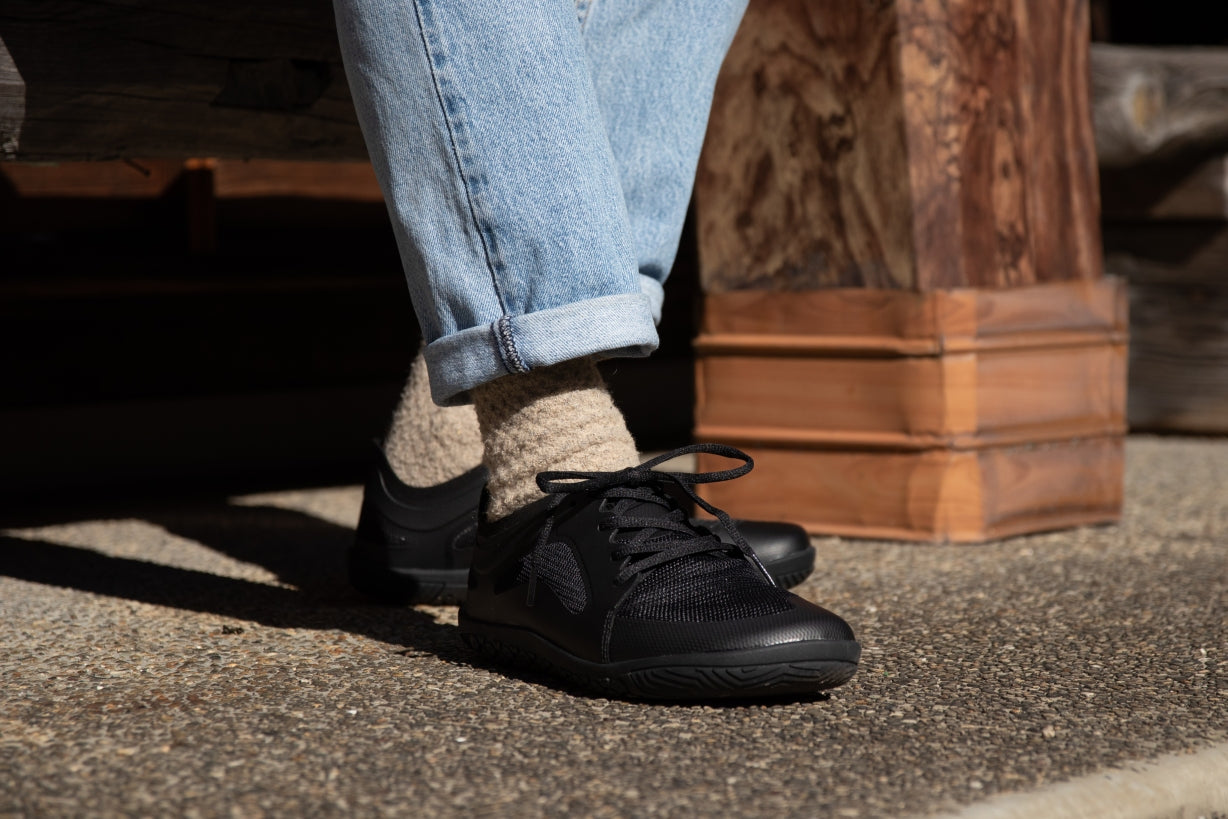
Barefoot shoes are shaped like actual feet. Wide at the front, room for your toes to exist as separate toes rather than one compressed wedge. It sounds obvious. It feels like a revelation.

2. Your heel has been living a lie
Almost every conventional shoe raises your heel slightly. Even trainers marketed as "flat" usually aren't. Wear that long enough, and your body adapts around it. Calves tighten. Posture shifts.
Zero-drop shoes put your heel and forefoot at the same height, which is where they were always supposed to be. The effect on posture and lower back comfort tends to show up within a few weeks of switching. Some people feel it faster.
3. Your feet have 26 bones, and most shoes pretend they have none
Your feet are genuinely sophisticated pieces of engineering. They are designed to flex, adapt, and respond to whatever surface they're on. A thick, rigid sole turns all of that into a passenger. The foot stops reading the ground and just sits in a padded box, wondering what it's supposed to be doing. Thin, flexible soles let your feet get back to their actual job. Which they're quite good at, when given the chance.
4. "Support" has been quietly making your feet lazier
This is the one that tends to upset people. But if you externally support a muscle, it doesn't need to work. Do that for long enough and it stops working particularly well on its own. Arch support feels helpful in the short term and over years it creates the exact dependency it was supposed to solve. Barefoot sneakers or shoes let your feet carry themselves. There's an adjustment period. That adjustment period is the whole point.
5. Feeling the ground sounds boring until you try it
There's a feedback loop between your feet and your brain that conventional soles interrupt completely. When you can actually feel the surface beneath you, your body responds to it in real time. Your gait adjusts. Your balance improves. You stop walking like someone who hasn't thought about walking since childhood.

People who switch often say it made them suddenly conscious of how they move. That awareness, sustained over a full day on your feet, adds up to something noticeable.
6. These are built by people who've been making shoes since 1937
Barely Barefoot is made by Draper, a British footwear company with nearly nine decades of construction knowledge behind it. The BareGrip sole is designed and tested to actually perform, not just photograph well next to a houseplant. Good materials, proper build quality, made to last rather than made to be replaced.
7. The adjustment period is three weeks, not three years
Your feet need time to remember what they're capable of. Wear them gradually at first. Don't immediately attempt a half-marathon. Most people are through the adjustment phase within three to four weeks, after which going back to a conventional shoe starts to feel genuinely odd.
Which, honestly, is probably the best review barefoot shoes could ever get.