
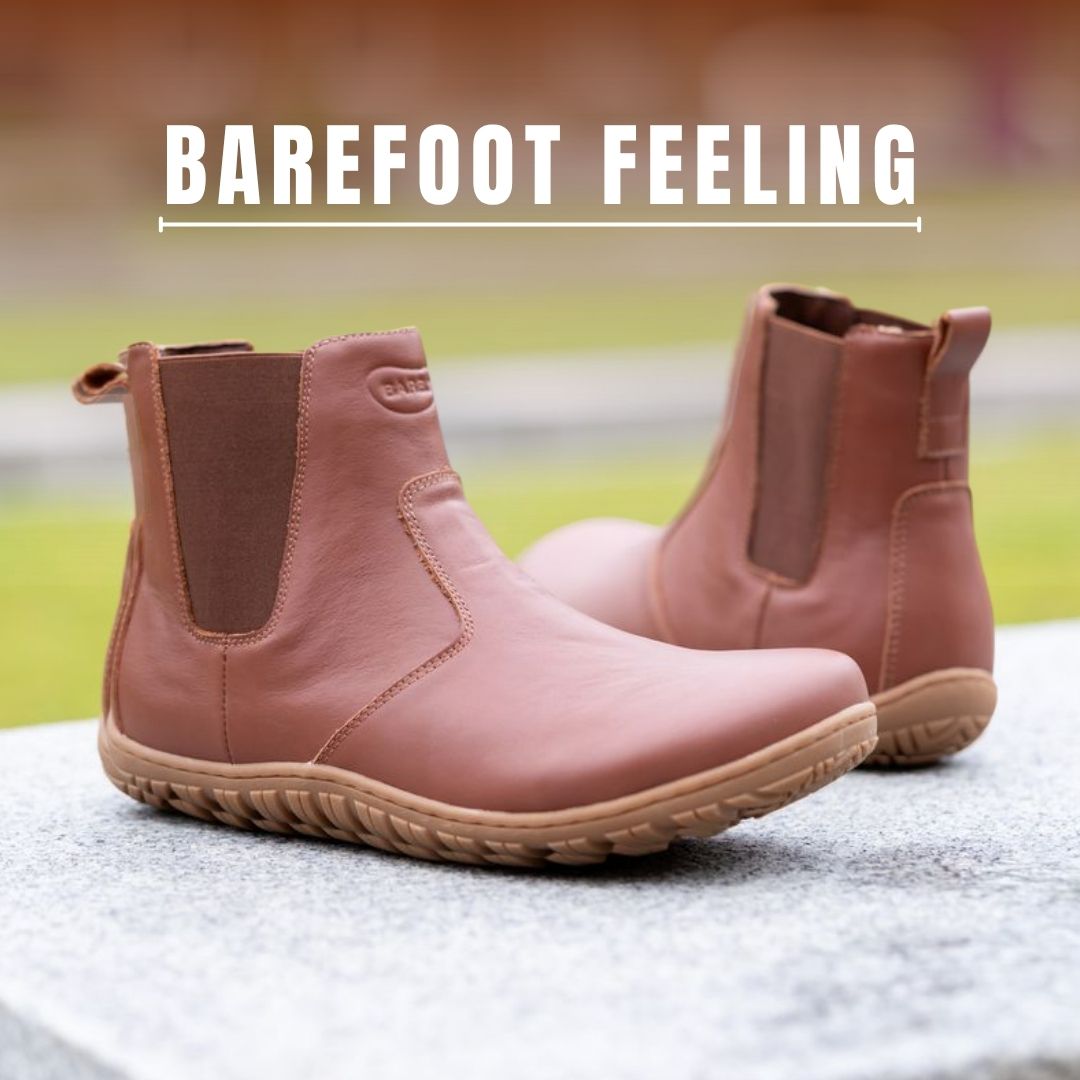
Grip is where everyone starts. And honestly, fair enough. You look at a barefoot trail shoe next to a conventional hiking boot, and the first thought is that the barefoot option looks like it's missing something. The sole is noticeably thinner, the whole construction feels lighter in the hand, and if you're planning to wear these somewhere that involves wet grass or a clay path in November, thin and light aren't the first words you want coming to mind. The Lakes get properly slippery. So does Dartmoor. So does just about anywhere in Scotland after a day of rain, which in Scotland means most days.
So, the grip concern is legitimate. What's worth understanding, though, is that conventional hiking boots and outdoor barefoot shoes generate grip through completely different mechanisms, and once that clicks, the thin sole starts to make a different kind of sense.

The Sole Isn't Thin Because of a Design Oversight
A rigid, thick-soled boot grips by pressing down hard and holding its shape. It doesn't much care what's underneath it because it isn't really in conversation with the ground. It just lands, and whatever happens after that is between your ankle and physics. On a flat, predictable surface, this is absolutely fine. On something variable, loose scree, compacted mud that transitions to wet root, the kind of trail that changes character four times in a single mile, the rigidity stops being a feature. The boot can't adjust to what's happening mid-step. By the time it figures out the ground has changed, you're already dealing with the consequences.
Barefoot trail shoes work the way feet are actually designed to work, which is in constant low-level communication with whatever they're standing on. The BareGrip outsole keeps enough material between you and the ground to handle sharp surfaces, but thin enough that your foot genuinely feels what's underneath it and can respond before the rest of your body needs to. Toes spread and grip without being told to. The arch adjusts to slopes before you consciously register the change in angle. The heel finds stability on descents by feeling for it rather than waiting to slip.
It's less about the shoe doing the work and more about letting the foot do what it's always been capable of when given the chance.
British trails specifically, because they are their own category of terrain
There's a particular kind of mud you get in the Cotswolds after a week of rain that behaves almost nothing like the mud you find on a Welsh hillside or the boggy sections of a Scottish long-distance route. Coastal paths in Cornwall have their own set of challenges entirely, moving between firm chalk, loose gravel, and sections where the path itself is slightly tilted toward a drop and you'd rather your footwear was paying attention. The Peak District gritstone gives you purchase even when it's wet, but the heather-covered approaches to it very much don't.
The point being that barefoot trail shoes in the UK need to handle a genuinely wide range of conditions rather than being optimised for one type of ground. When you're looking at a pair seriously, the things worth actually checking are whether the sole pattern is designed for mixed terrain rather than a single surface type, whether the upper handles moisture without absorbing it like a sponge, and whether the heel fit is genuinely secure because on any kind of descent a heel that moves inside the shoe is going to create instability that the grip underneath simply cannot compensate for.

The part that trips most people up
Going from structured hiking boots to outdoor barefoot shoes requires an adaptation period, and there's no way to shortcut it, even though plenty of people try.
The stabilising muscles through the foot and lower leg have typically been passengers inside conventional footwear for years. They exist. They're just not particularly strong or particularly used to being called upon at any serious level of demand. Those muscles need time to rebuild before they're ready for a full day on real trail, and the people who decide to skip that process and head straight to challenging terrain on day one tend to have a fairly specific and unpleasant experience of discovering exactly which muscles weren't ready yet.
A few weeks of shorter walks on easier ground is genuinely all it takes. Then progressively more demanding outings as the strength comes back and the proprioceptive awareness develops, that slightly uncanny feeling of knowing where your foot is and what it's doing without having to consciously think about it. Once that's in place, the difference on variable terrain compared to what a conventional boot offers is stark enough that most people can't quite believe they spent years managing without it.
Non-slip barefoot shoes reward patience in the beginning and pay it back with interest for every walk afterward. Britain's trails are worth experiencing properly. It just takes a few weeks to get there.